If you’re a history buff or just a lover of quirky facts, here’s something that’ll give you chills. Imagine a secret tunnel beneath the bustling streets of Kolkata, one that has witnessed some of the most monumental events in history. Yes, the 157-year-old General Post Office (GPO) in Kolkata not only boasts a fascinating history but is also home to a hidden tunnel believed to have been used by Nawab Siraj-ud-Daulah to escape from the British during his last days of the Bengal War. Sounds like something out of a thriller, doesn’t it? Well, stick around, because we’re about to uncover a few secrets that might just leave you wondering what other stories lie hidden in the heart of Kolkata.
The Fascinating Postal Museum at Kolkata GPO
Before we dive deep into the history, let’s start with the incredible museum that you simply cannot miss when visiting Kolkata. Located at Netaji Subhas Rd, B.B.D. Bagh the Kolkata GPO is home to a magnificent Postal Museum that showcases the evolution of India’s postal services. From ancient times to the modern era, the museum displays a rich collection of artefacts, stamps, and postal instruments that were used in the past.
Here, you’ll find miniature models that give a glimpse into how letters and important documents were carried across forests and difficult terrains. You might even get to see old telephones, fax machines, and various postal delivery tools. The real surprise comes when you observe the antique postcards where the tiny handwriting looks almost like something typed on a typewriter, but it was all done by hand!
The museum also houses awards given to postal workers during the British era, as well as a collection of historic letterboxes. It’s truly a journey through time, with each display telling the story of how the postal system evolved from the very first letters delivered in India to the advanced postal services we use today. The museum is open to the public from Monday to Saturday from 11 AM to 4 PM, and it’s a fantastic opportunity to dive into India’s postal history.
The Hidden Tunnel and Rich History of Kolkata GPO
During World War I, the GPO became a vital communication centre, linking the British Empire and its eastern colonies, as Kolkata was the capital of British India at the time. It was here that telegrams and letters travelled back and forth from the frontlines, keeping the British administration in control of operations in the eastern theatres of war. This site is also where revolutionaries like Khudiram Bose and Netaji Subhas Chandra Bose strategised against British rule.
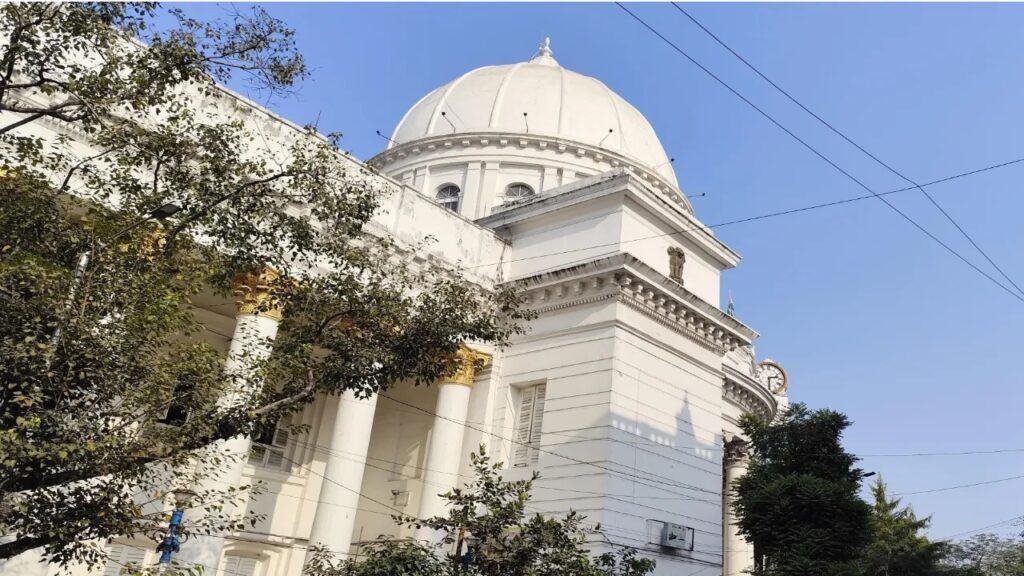
Now, let’s talk about the real hidden gem of Kolkata, the astonishing history of the Kolkata GPO itself which now stands as a UNESCO-recognised heritage building. Built-in 1868 by British architect Walter B. Grenville, the GPO is a testament to Kolkata’s colonial past and has stood the test of time, bearing witness to countless historical events. Before it became the bustling post office we see today, this very site was the location of the infamous Fort William. Yes, you read that right the GPO stands on the site where the British East India Company once fortified their stronghold.
This is where the legendary Black Hole of Calcutta tragedy occurred, an event that shocked the world. Following the British refusal to dismantle Fort William, Siraj-ud-Daulah’s forces attacked the fort, leading to a fierce battle. After the fort’s fall, British prisoners were crammed into an overcrowded cell the Black Hole where most perished from suffocation. It’s a tale of colonial resistance but that’s not all!
The Secret tunnel pathway towards the Ganga river in Kolkata GPO
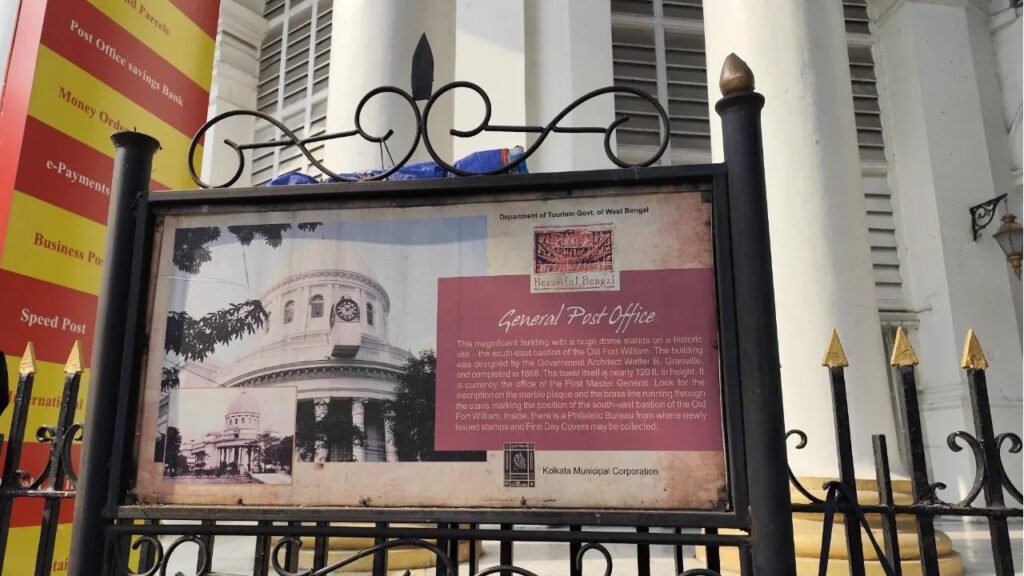
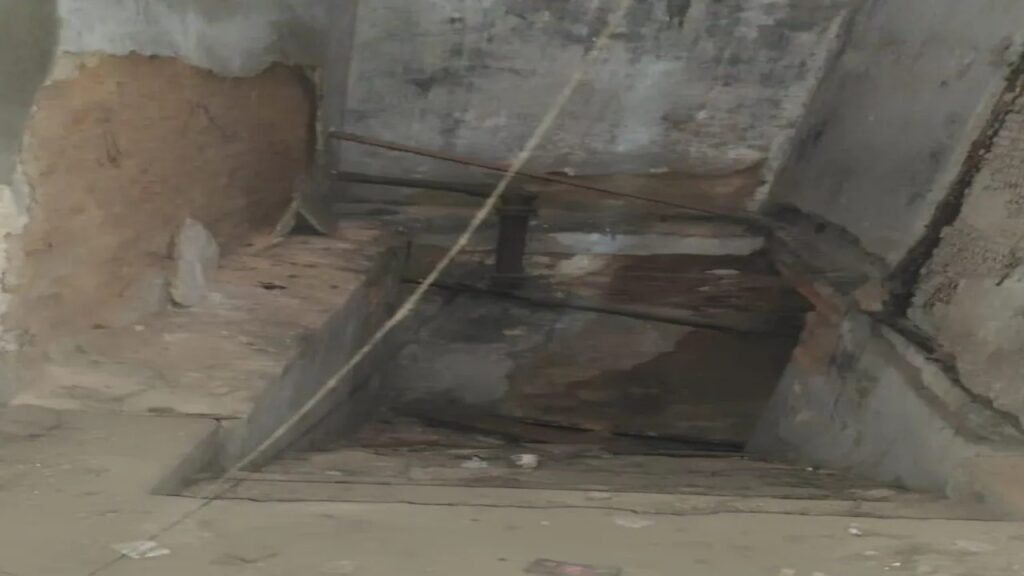
The most fascinating and mysterious aspect of the Kolkata GPO is the hidden tunnel that still exists within its walls. After losing the Battle of Plassey, Nawab Siraj-ud-Daulah attempted to escape, first fleeing to Murshidabad and then trying to travel further by boat towards Patna, but was eventually captured by Mir Jafar’s soldiers and killed. And it is a popular local belief that Nawab Siraj-ud-Daulah used the secret tunnel of the Kolkata GPO to escape in 1757, spine-chilling, isn’t it? As you wander through the corridors of the GPO, you can’t help but feel a sense of awe at its historical significance.
This tunnel remained a secret for many years, and even today, it adds an aura of mystery to the GPO. The building has witnessed countless moments of history from its use by the British as a court to the chilling tales of the Nawab’s escape.
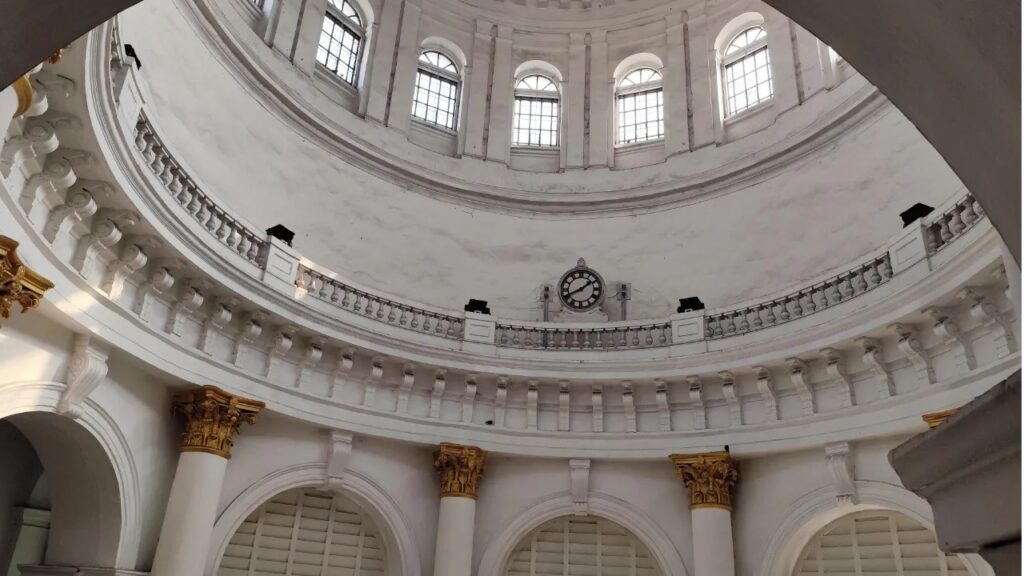
But one of the most striking features of the Kolkata GPO is its architectural brilliance. The building is renowned for its high domed roof, which stands at over 220 feet tall, and its grand Ionic-Corinthian pillars that support its structure. The dome top of the building is especially noteworthy. According to Jayanta Banerjee, who work in the GPO for several years, this dome is one of the most impressive aspects of the structure. He says, “The dome was made entirely of brass, a detail that might go unnoticed because of the white colour.”
The GPO also houses two giant clocks, one on the inside and another on the outside. Both clocks were imported from London and still working fine because both run on keys. While the clocks might seem small from the outside, Banerjee jokingly remarked that the exterior clock is so large that an adult person could lie down on it!
The GPO During the British Era

During the British era, the GPO building served multiple purposes, many of which had a unique flavour of intrigue. In addition to its postal function, it was used for entertainment, including grand dance performances and public events. It is even said that during British rule, the second floor of the building was used for bizarre activities such as the British officers playing chess with real human beings, commanding them to move across the floor for their amusement!
The GPO also witnessed a darker chapter of history. It is believed that during the reign of Nawab Shiraj-ud-Daulah, 20 workers were buried alive within the walls of the GPO as a form of punishment for a crime. Banerjee confirmed that even he has experienced eerie incidents during his time working there. The workers often reported strange shadows and whispers late at night—creepy, right? Banerjee adds, “It might be the brain playing tricks, but sometimes we feel something is watching us. The stories around this place have created an eerie atmosphere.”
Unesco world heritage site kolkata that You Shouldn’t Miss
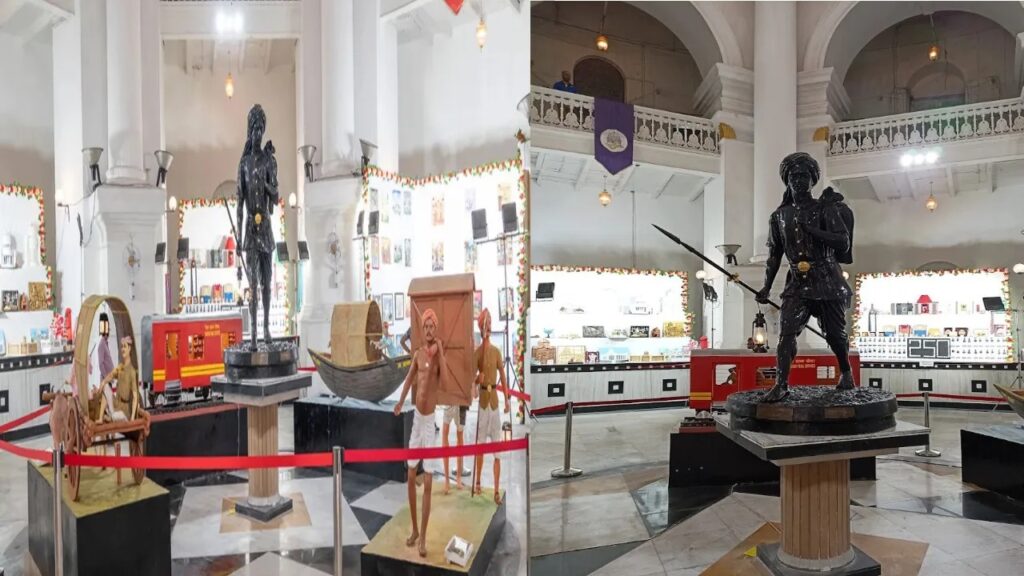
Today, the Kolkata GPO is one of the largest post offices in India and serves as a hub for postal services in Kolkata. The building houses a Philatelic Bureau and plays an essential role in promoting literacy, environmental awareness, and social welfare through various partnerships with schools and colleges. Its hidden tunnel, majestic architecture, and fascinating museum make it a must-visit for anyone interested in Kolkata’s past. If you’re planning to explore Kolkata, make sure to include the GPO on your list. After all, what could be more exciting than visiting a place where history comes alive? Next time you’re in Kolkata, take a moment to pause, look around, and reflect on the centuries of history that have shaped this iconic structure. It’s not just about postal services it’s about preserving the essence of Kolkata’s heritage for generations to come.