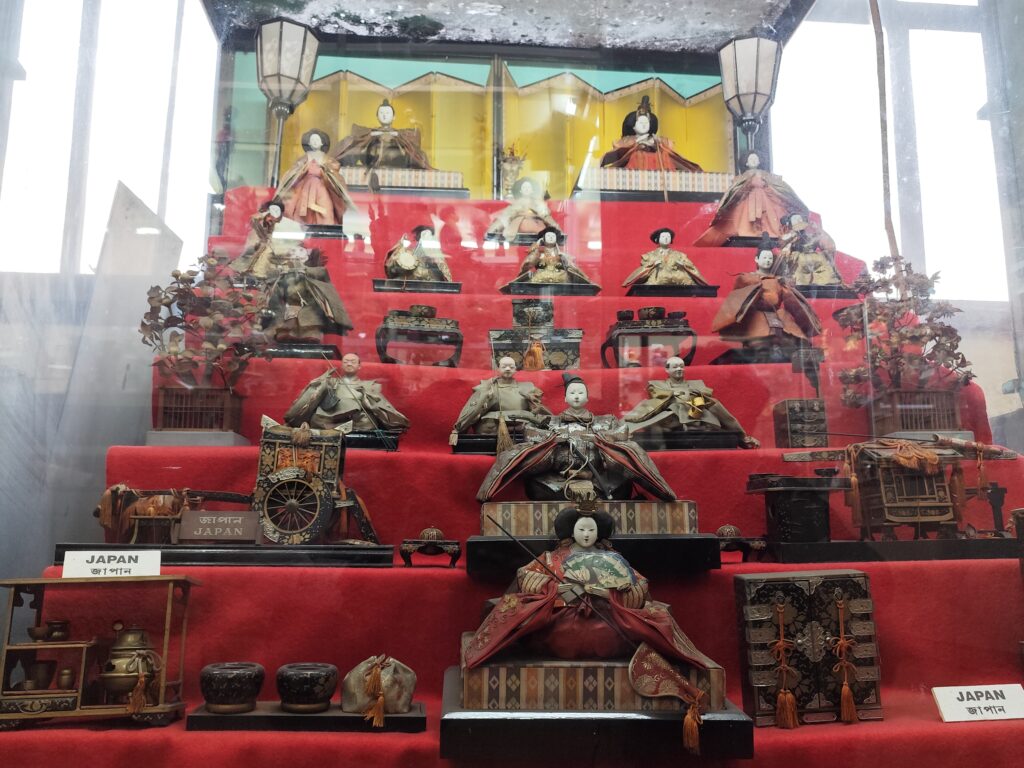
When people think of Kolkata, Park Street’s energy, Victoria Memorial’s grandeur, or the aroma of a hot kathi roll often spring to mind. Some may even recall the famous Sunday Chinese breakfast at Tiretta Bazaar. But have you ever stepped into the quieter, lesser-known lanes that hold Kolkata’s Chinese temples? One Sunday morning around 5 am we reached Tiretta Bazaar hoping to try the famous Chinese breakfast. At first, it felt too early—the market was only half awake. By 6, vendors had begun serving everything from soft Chinese buns to fried waltons, fish soup, sausages and crackers. After the feast we walk through these Chinese temples, to know iverse cultural stories and timeless traditions of Kolkata. These places of worship, often called “churches” in old British records, are not Christian at all. They are community temples that preserve the traditions of Cantonese and Hakka settlers who arrived centuries ago.
The Chinese community has been part of Kolkata since the late 18th century, when Tong Achew, a trader, set up a sugar mill near what is now Achipur. As the community grew, many settled in the area that later became known as Tiretta Bazaar, one of the first Chinatowns in India. Each temple has its own story, and together they weave the larger narrative of the Chinese community’s settlement in the city. So, are you ready to explore the hidden gems of Kolkata’s Chinatown and dive into a part of the city’s rich heritage? Let’s go!
1. Sea Voi Yune Leong Futh Church
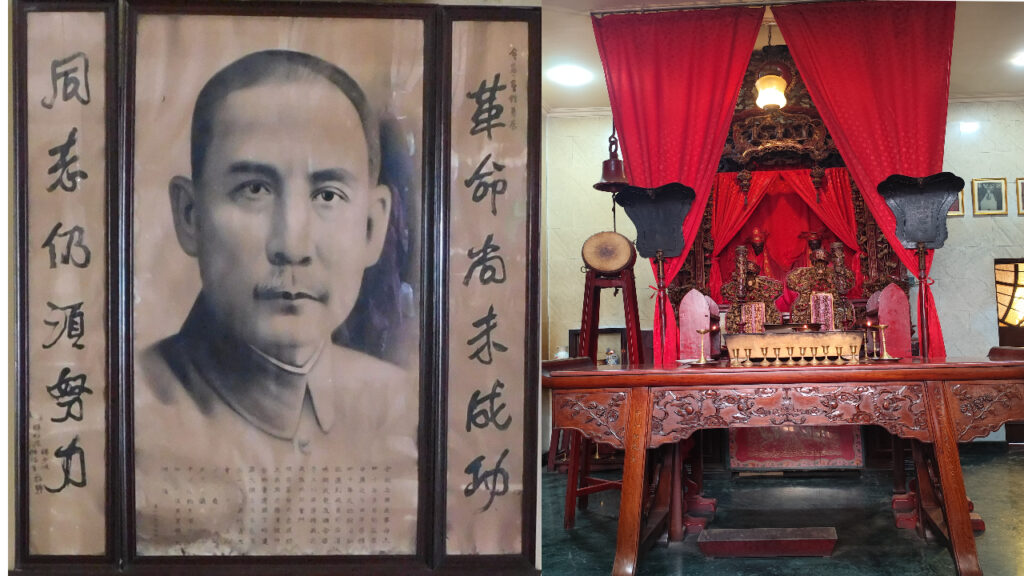
Our first stop was Sea Voi Yune Leong Futh Church, tucked into Blackburn Lane. Built in 1908, it’s small but rich in history. From the outside, it looked closed, but we were lucky enough to be welcomed inside by the All Indian Chinese President Mr. Stephen Chen. He shared stories about the temple’s heritage. Inside, rare twin idols of Ruan Ziyu and Liang Cineng, believed to be incarnations of Buddha, keep the temple spiritually alive. The temple also honours Tong Achew, the first Chinese settler provider in Kolkata, making it a site of remembrance for the Chinese community in Kolkata. Inside, Inside the temple, a charcoal portrait nearly 100 years old, caught our attention, still intact and breathtakingly detailed. Mr. Chen explained it was of Sun Yat-sen, the Chinese revolutionary who led the 1911 Xinhai Revolution and became the first president of the Republic of China. He is often called the Father of Modern China.
What surprised me was the link to India. Mr. Chen shared that in the early 1900s, a house at 6, Chattawala Guli was used to smuggle arms from China. These weapons were quietly passed on to Kolkata’s freedom fighters, especially those with communist leanings, to resist British rule. The Sea Voi Yune Leong Futh Church is the only one in Tiretta Bazar where photography requires prior permission from the temple authorities.
Where: 5, Terita Bazar, Tiretti, Kolkata, West Bengal 700073
When: 9 AM to 12 PM
2. Nam Soon Church
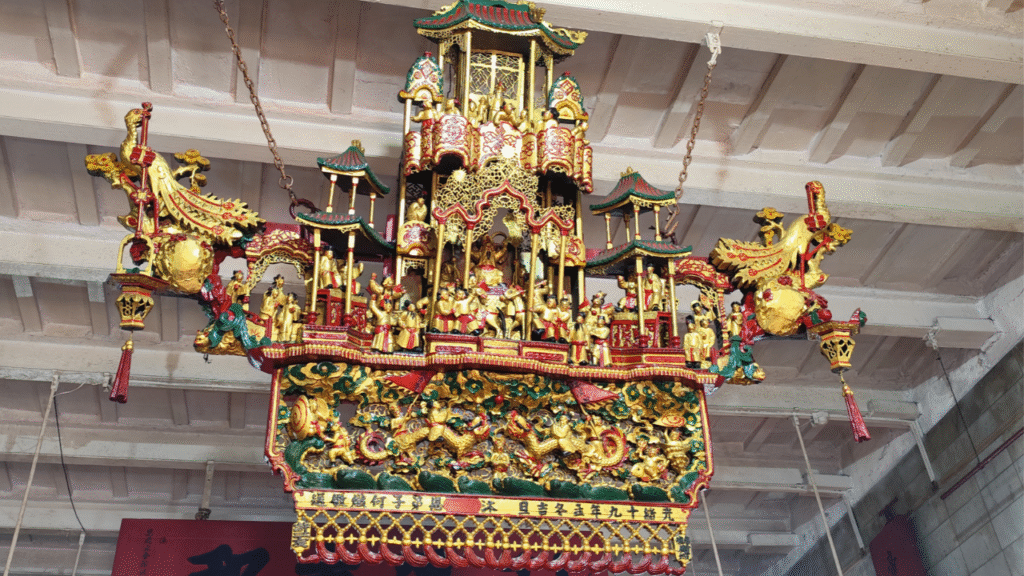
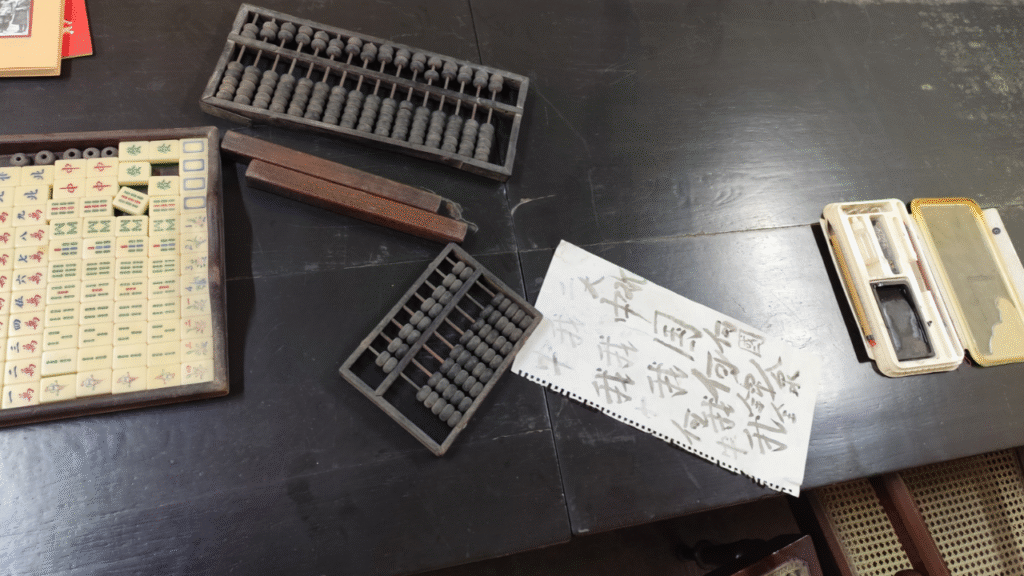
Next, we explored Nam Soon Church—the oldest Chinese temple in Kolkata—stood tall since 1820. A spacious courtyard shaded by many trees was a peaceful pause in the city’s morning rush. The current secretary, Mr. Tony, shared tales of the of Kwan Yin, the Goddess of Mercy, share space with furniture and artefacts that have stood for nearly two centuries. Even let us try Chinese calligraphy and abacus lessons. This temple is more than a shrine; it’s a hub with its own school, club, and age-old home that nurtures the community spirit. Standing here, we could almost feel two centuries of Chinese settlement in Kolkata unfolding in front of us.
Where: 17, Damzen Ln, Tiretti, Kolkata, West Bengal 700073
Time: 9 AM to 12 PM
3. Toong On Church
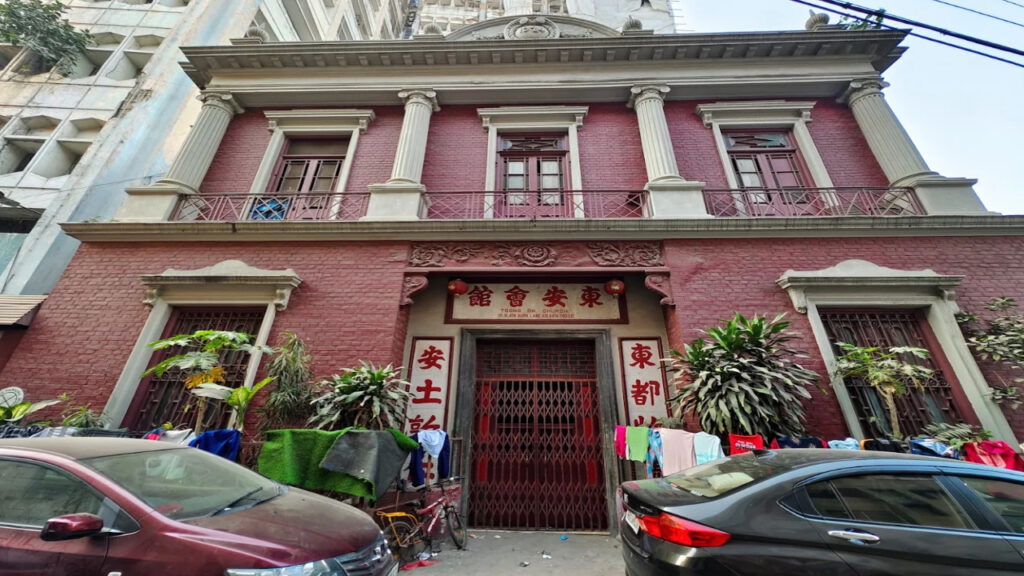
Our next stop felt like a walk through culinary history. This Temple has a unique history, as it was once the location of the famous Nanking Restaurant, a pioneer of Chinese cuisine in Kolkata. The building’s ground floor housed the restaurant, while the first floor was reserved for the family temple. The Nanking Restaurant is now closed due to a legal dispute, but the temple continues to be a silent guardian of Chinese traditions. The temple itself is dedicated to Kwan Ti, the Chinese God of War. Its stained-glass windows and classic early 1900s architecture provide a glimpse into the era when Chinese immigrants were thriving in Kolkata.
Where: 22, Peter Ln, Kolkata, West Bengal 700012
Time: 6 AM to 7 PM
4. Sea Ip Church
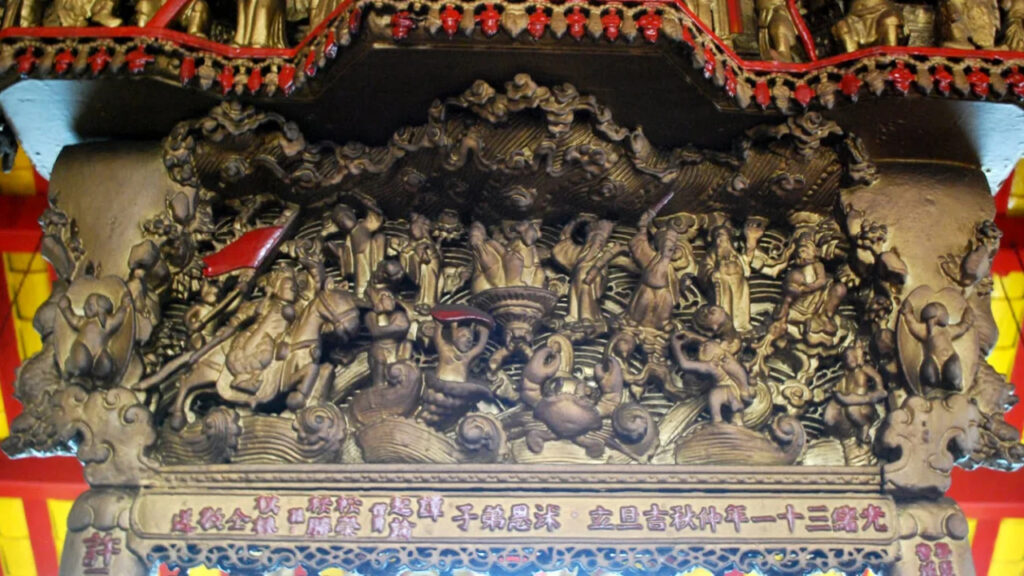
On Indian Exchange Place Extension, the Sea Ip Church catches the eye with its two-storey structure. Established in 1905, it’s dedicated to Kwan Yin. The upper floor, with its porcelain Buddhas and ornate wooden roof, feels timeless. Meanwhile, the ground floor functions as a lively social club. Elderly Chinese men often gather here to play chess or read The China Mail, once the only Chinese newspaper printed in India. Visiting this place felt like stepping into both a shrine and a community living room.
Where: H9F4+756, Poddar Court, Terita Bazar, Kolkata, West Bengal 700012
Time: 9 AM to 12 PM
5. Gee Hing Church
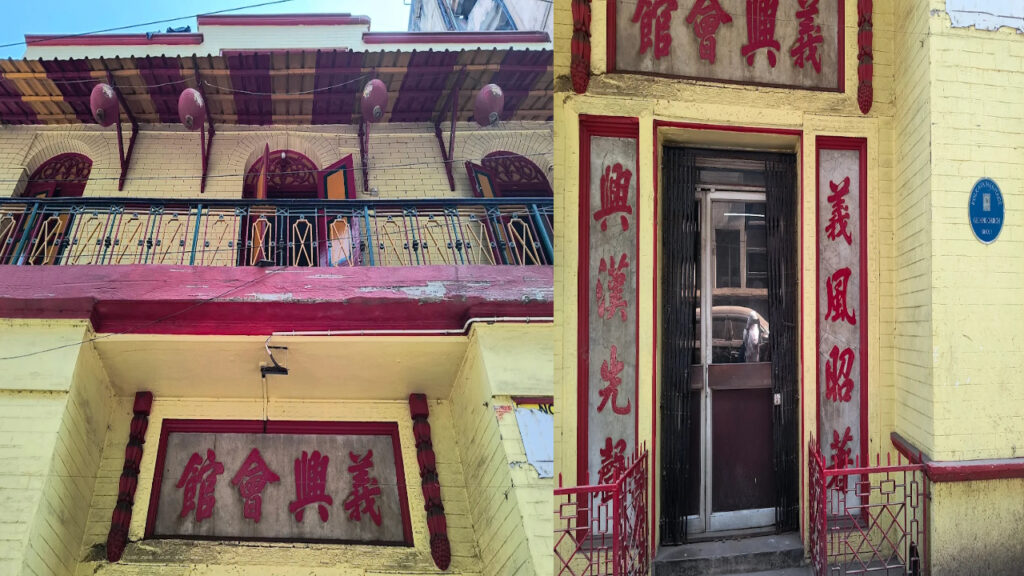
Hidden above a carpentry shop on Blackburn Lane, Gee Hing Church was built in 1888 and later relocated in 1920. This two-roomed temple is also home to the Gee Hing Club, where Mahjong remains the favourite pastime. Inside, you’ll find shrines dedicated to Kwan Ti, framed paintings of Kwan Kun, and delicate woodwork that whispers tales of the past. Though slightly weathered, the temple holds a rare charm, offering visitors a quiet corner to reflect and reconnect with Kolkata’s multicultural roots.
Where: 27, Terita Bazar, Tiretti, Kolkata, West Bengal 700073
Time: 6 AM to 12 PM
6. Choonghee Dong Thien Haue Church
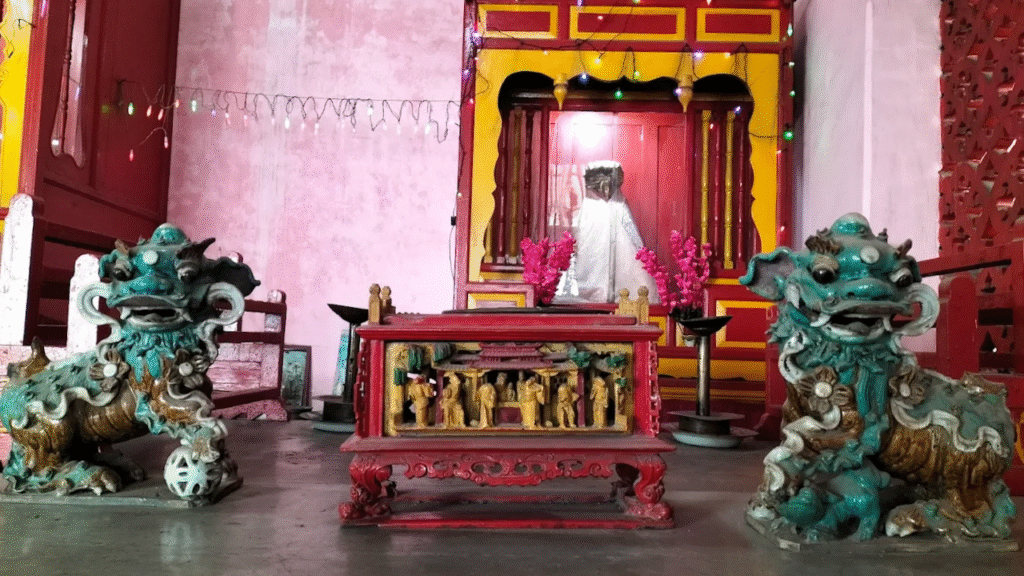
Our final stop was Choonghee Dong Thien Haue Church, established in 1859. Located at the intersection of Damzen and Blackburn Lane, it’s a little tricky to find but well worth the detour. Dedicated to Kwan Kun, the God of Fortune, this temple also honours Tien Hou, the Queen of Heaven. Its Islamic-style mosaic floors reveal the cultural fusion of Kolkata, where communities borrowed and blended from one another. Even with signs of age, the temple remains a living part of Chinatown’s spiritual heart.
Where: 32, Black Burn Lane, Poddar Court, Tiretti, Kolkata
Time: 9 AM to 1 PM
Chinese Community Settlement in Kolkata
While exploring these temples, we were reminded that they are more than just religious spaces. They are living museums of migration, resilience and adaptation. From carpenters and dentists to shoemakers and restaurateurs, the community carved out a unique identity. The Indo-China war of 1962 changed much, but traces of that vibrant past still survive in places like Tiretta Bazaar and Tangra. Even today, the Chinese temples in Kolkata stand as cultural anchors, welcoming curious travellers and reminding us of the city’s layered history. If you’re looking to step beyond the familiar sights of Park Street and Victoria Memorial, these temples offer a different kind of journey—one that is spiritual, historical and deeply human.