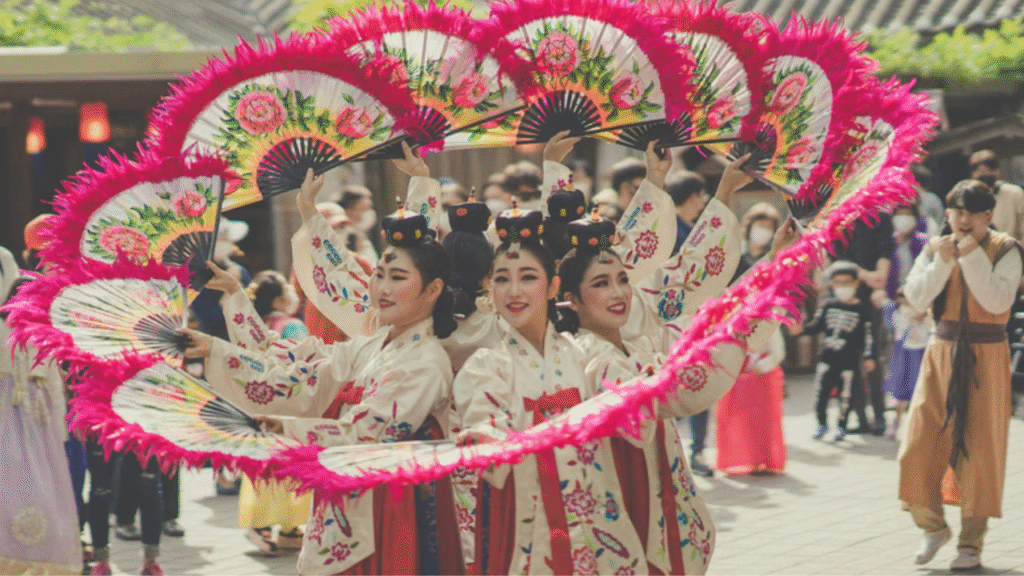
When on the 15th day of the 8th lunar month the full moon shines brightest in autumn, South Korea comes alive with the warmth of Hangawi — better known as Chuseok. But what is Chuseok? Simply put, as Korean Thanksgiving that celebrates the year’s bountiful harvest and honours ancestors for their blessings. Chuseok history deeply rooted in gratitude and the three joyful days of togetherness.
During this Chuseok holiday, millions of Koreans travel to their hometowns for family reunions, ancestral rites (Charye), and grave visits (Seongmyo). Tables overflow with Chuseok food made from freshly harvested crops, from colourful rice cakes to fragrant stews. As Chuseok 2025 date falls between October 5–8, with the main celebration on October 6, let’s explore five traditional chuseok food recipes that symbolise everything this chuseok korean festival stands for — love, gratitude and the comfort of home.
1. Songpyeon (송편 – Half-Moon Rice Cakes)
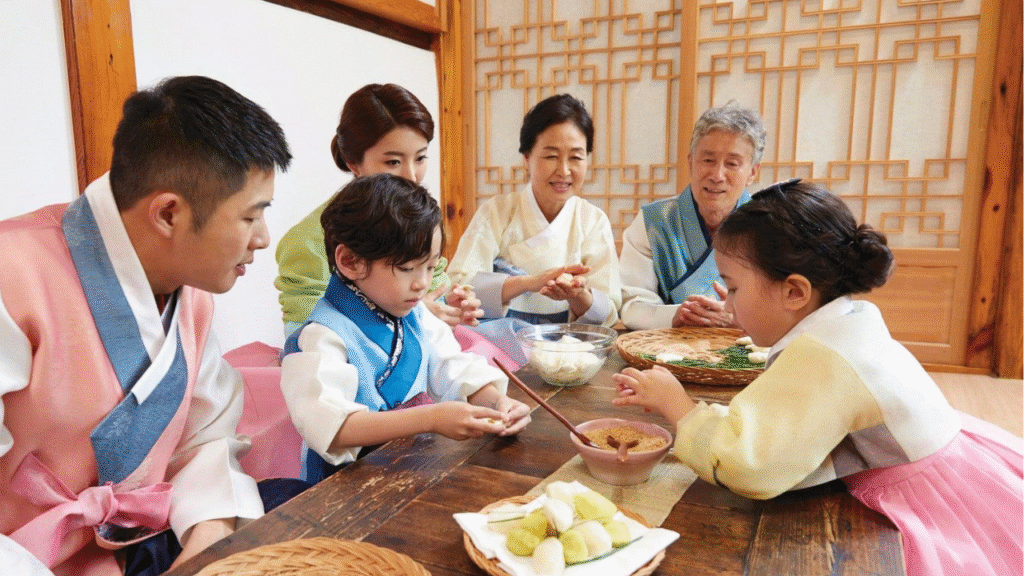
No Chuseok food is more iconic than Songpyeon, the half-moon rice cake that symbolises wishes for prosperity. During Chuseok festival in Korea, families gather the night before to handcraft these beautiful rice cakes using freshly milled rice flour filled with sesame, honey, or red bean paste. Steamed over pine needles, they carry a distinct aroma that embodies the Chuseok festival. The crescent shape mirrors the waxing moon — a symbol of growth and hope. Legend says that those who craft perfectly shaped songpyeon will be blessed with fortune or a beautiful child. Beyond taste, it’s a meaningful family tradition linking generations through shared craftsmanship and gratitude.
2. Japchae (잡채 – Stir-Fried Glass Noodles)
A must-have on every Chuseok festival table, Japchae is a dish that sparkles with autumn colour. Made with sweet potato noodles stir-fried with beef, spinach, mushrooms, and carrots, it’s seasoned with soy sauce and sesame oil for a savoury-sweet balance. Though eaten throughout the year, Japchae holds a special place during Chuseok in Korea because it symbolises abundance and long life — the noodles representing longevity. Families prepare it early in the morning for the ancestral rite (Charye), offering it to their forebears as part of the harvest gratitude ritual. The dish reflects the core values of Chuseok history: effort, sharing, and respect for family.
3. Jeon (전 – Korean Savoury Pancakes)
Another beloved Chuseok food, Jeon are golden-brown, savoury pancakes made from fish, courgette, or beef coated in flour and egg. Fried to crisp perfection, they are a festival staple served as side dishes or snacks. In many Korean households, preparing Jeon during the Chuseok holiday becomes a collective activity — laughter fills the kitchen as generations cook together. Their round shape and golden hue represent the full moon and the richness of the harvest. Whether it’s pajeon (spring onion pancake) or hobakjeon (zucchini pancake), these simple dishes capture the spirit of Chuseok in Korea — gratitude, unity, and the joy of sharing.
4. Galbijjim (갈비찜 – Braised Beef Short Ribs)
Galbijjim brings a comforting depth to the Chuseok festival feast. This dish of braised beef short ribs simmered with soy sauce, carrots, and radish is reserved for special occasions, reflecting its roots in royal cuisine. Historically, meat was a luxury, so serving Galbijjim during Chuseok in Korea signifies abundance and reverence for ancestors. Families often prepare it in large pots, filling homes with its rich aroma. During Charye, it’s presented as an offering of gratitude, embodying the essence of Chuseok history — the balance between hard work and thankfulness for the harvest’s rewards.
5. Samsaek Namul (삼색나물 – Three-Coloured Vegetables)
Samsek Namul — the trio of seasoned vegetables — is a quiet yet essential presence on the Chuseok food table. The three colours hold deep symbolism: white (radish or bean sprouts) represents ancestors, brown (bracken) symbolises parents, and green (spinach) stands for descendants. Together, they reflect harmony in nature and family. Prepared simply with sesame oil and soy sauce, these dishes are a core part of Charye, honouring lineage and expressing respect. Their humble ingredients reflect the heart of Chuseok in Korea — gratitude for life’s cycles and the beauty of continuity through generations.
Don’t miss the spirit of this season — celebrate the Chuseok festival with these traditional Korean recipes, and to wish your loved ones, say “Chuseok jal bonaeseyo,” which means Happy Chuseok in Korean!